



Americas
Starbucks ties exec incentives to turnaround plan
Starbucks has approved $6m in performance-based stock for executives to encourage them to follow through on the company’s ‘Back to Starbucks’ turnaround plan. The incentives will pay out only if the company meets certain expense reduction targets, and they are tied to various elements of CEO Brian Niccol’s plan to return the Seattle-based coffee brand to its roots as a coffee shop where customers want to stay a while ‒ including coffee house remodels to make stores more friendly and inviting and a ‘reimagined’ loyalty program.
Researchers flag bias in red meat health studies
A new review published in the American Journal of Clinical Nutrition has found that studies funded by the red meat industry are far more likely to report neutral or positive health effects than independent ones. Researchers analysed 44 clinical trials and found that industry-backed studies were almost four times more likely to suggest red meat has a neutral or beneficial effect on cardiovascular health. In contrast, studies without industry ties often compared red meat to plant proteins and reported worse outcomes. As the US prepares to update its dietary guidelines, the findings raise fresh concerns about how industry influence can shape public perception – and public health policy.
Europe, Africa, Middle East
Not-for-profit Hospitality Connect secures £200k to boost employment opportunities for students in UK
A UK not-for-profit organization connecting secondary schools with local hotels has secured £200,000 in funding from the Savoy Educational Trust. Since it was founded by hotelier Adrian Ellis in 2021, Hospitality Connect has supported 4,000 students into opportunities for employment. The project has grown from 30 partnerships in Manchester to now over 150 partnerships across 16 cities and regions in England, Scotland and Northern Ireland. With the new grant, it has set its sights on reaching 400 partnerships and engaging 10,000 students per year by 2028.
Saudi Arabia launches new labelling regs to curb diet-related diseases
Restaurants and cafés in Saudi Arabia must now display detailed nutritional information on menus following a new directive from the Saudi Food and Drug Authority (SFDA) directive, which took effect last week. The goal is to enable customers to make better-informed food choices in response to growing health issues such as obesity and high blood pressure. Under the revised technical standards, establishments must mark high-sodium dishes with a saltshaker symbol, list caffeine levels in drinks and provide the approximate time needed to expend the calories in each menu item. Alongside new rules for F&B outlets, the SFDA has also rolled out digital resources for consumers, such as an online caffeine calculator, that allow them to gauge their daily caffeine consumption based on age and lifestyle factors.
Asia Pacific
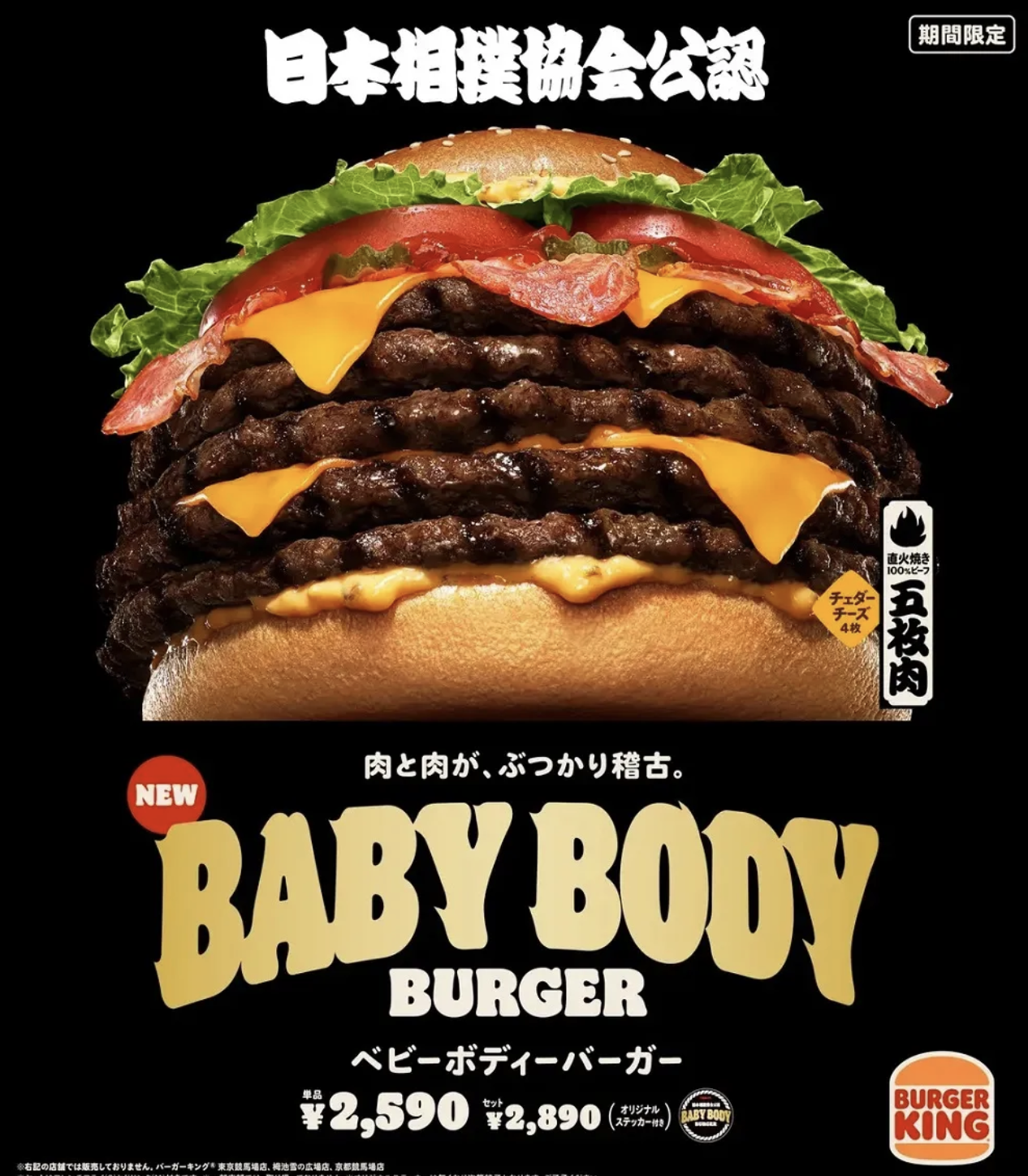
1,876 calorie Baby Body Burger sets BK record in Japan
Burger King Japan has revealed its biggest burger yet ‒ a beef behemoth containing five flame-grilled patties, four slices of cheddar, four strips of bacon, pickles, lettuce, tomato and a tangy sauce. Dubbed the Baby Body Burger and packing a whopping 1,876 calories, it’s being positioned as a ‘Yokozuna-class’ dish, a nod to the highest rank in sumo wrestling. It’s no wonder ‒ most adults require between 1,600 and 3,000 calories a day to maintain their health, so this mammoth meal, which is being launched to coincide with the Grand Sumo Tournament in Nagoya, delivers nearly a full day’s worth of calories in one sitting. (For comparison, the highest-calorie item currently on the US Burger King menu is the Triple Whopper with Bacon & Cheese, which clocks in at 1,350 calories.) We think we’ll probably sit this one out.
Delivery surges in popularity in Asia Pacific
Delivery has emerged as the leading channel in Asia Pacific’s foodservice market, rising from 10% in 2019 to a projected 23% by 2024, according to a new report from Euromonitor International. This evolution is part of a larger trend, with the region now accounting for 40% of global foodservice sales and poised to grow by 6% by 2029. Looking ahead, the report predicts that delivery will climb to 26% of Asia Pacific’s foodservice market by 2029, while traditional dine-in options will likely plateau at 64%. Limited-service restaurants are also thriving, according to the report, catering to price-sensitive consumers with smaller, more affordable menu items.
Elly Earls


