


Food as a warm embrace
Food futurologist Dr Morgaine Gaye says comfort, light and goodness will come into focus on menus in the next year. “We are in destabilized and disruptive times and it can feel a bit bleak, so we are looking for a softness and warmth, and we have been since the pandemic.”
She highlights the humble banana. “It is warm and comforting and it pairs well with other warm flavors, such as chocolate, caramel and peanut butter and I am seeing it coming through a lot more,” she says. Equally fitting into that warm flavor bracket is cardamom, a spice she expects to see on an increasing number of menus.
Banana shares its appealing bright color with sweetcorn, which we will see more as flavorings in ice-cream or cakes. “It is sweet, but it has that healthy skew, which we will still be looking for,” she says. This health focus, including functional adaptogens, natural substances that help the body adapt to stressors, will be significant too. “Anything that’s going to make people feel better and sleep better,” says Gaye. “In recent years we have seen everything branded as ‘added protein’; now we’ll see much more with ‘added immunity’.”
She says social media, will continue to be the ideal platform to propel concepts and ingredients.
Consumers set the mood
Industry indicators point to flat growth and continued challenges on the immediate horizon, according to Charlie Souhrada, vice president, regulatory and technical affairs of the North American Association of Food Equipment Manufacturers (NAFEM).
“This doesn’t mean opportunities aren’t out there, but it increases the pressure and urgency to monitor and take action before you’re eating someone’s dust,” he explains. “This leads me to dust off two, timeless watchwords – nimble and innovation – both of which will be key this year.”
How 2026 unfolds for the sector will depend on consumer sentiment. Are consumers feeling optimistic? Consumers and their disposable income – or lack thereof – will continue to call the shots, he says.
The experience of Covid added another dimension to the sector’s alertness and the lessons learnt have stayed. “Manufacturers gained a keen appreciation for the value of monitoring issues to minimize the threats and maximize available opportunities,” says Souhrada.
Overall, his instinct is that the mood is cautiously optimistic. “One year ago, The NAFEM Show in 2025 proved the industry was eager to move forward and look for ways to wow our customers. Despite the day-to-day challenges, I see that mood continuing.”
A joined-up approach
If you ask Joakim Granfors, who stepped into the role as secretary general of the European Federation of Catering Equipment Manufacturers (EFCEM) at the start of the year, there’s cause for optimism among members.
He predicts smart kitchen technology adoption will help ease the pressures the industry is facing. “IoT (Internet of Things)-enabled equipment with predictive maintenance, energy optimization, and cloud connectivity will create premium product differentiation and recurring revenue opportunities for manufacturers,” he says.
“We have seen tourism growing again in Europe and it’s really a fantastic place to live and travel. For hospitality expansion, driven by tourism, we need high-quality commercial equipment. Digital transformation with AI-driven analytics, and IoT-connected kitchen automation will revolutionize operational efficiency. So, we can have these upgrade cycles even in mature markets,” he says.
The Federation is the only commercial kitchen equipment group represented in Brussels and wields considerable influence with direct access to EU policy-making.
“Unlike fragmented national efforts, we can unite these European manufacturers. Many of them are also global industry leaders and we can give them one powerful collective voice. That means that we also must work on formulating standards, monitor legislation, and influence regulations before they’re finalized.”
Memorable and meaningful experiences
As purse strings tighten and prices increase, diners are becoming more conscious and intentional about when, where and how they eat out, according to Craig Hawtin-Butcher, managing director of The World’s 50 Best Restaurants.
“Rather than frequency or volume, they’re prioritizing quality over quantity – choosing fewer meals out, but expecting them to feel genuinely special and worth the spend,” he says. “The ongoing cost-of-living pressures mean consumers are only more accepting of higher prices when there’s a clear sense of value.”
Guests want to see that reflected in better ingredients, seasonal cooking and thoughtful execution.
“We have seen a greater emphasis on atmosphere, service and narrative and I expect that to continue,” he adds. At 50 Best there is a special award for front-of-house teams that understand how to deliver experiences that are both memorable and meaningful. The Art of Hospitality award seeks to raise the profile of the art of restaurant and bar hospitality across the globe.
“Fine dining today is far less about rigid formality and far more about quality, intent and experience,” concludes Hawtin-Butcher. “The traditional definitions are loosening, allowing chefs and restaurateurs greater freedom to express identity, culture and creativity – whether through a formal tasting menu or a more relaxed, contemporary setting.”
Workplace catering in flux
The contract catering market is entering a pivotal phase in 2026, says David Kenny, the managing director of UK contract caterer Eurest. Shifts in workplace culture, economic pressures and evolving employee expectations have reshaped how employers view food services.
He believes that employers increasingly view catering as a strategic lever for productivity, engagement, retention and brand reputation and 2026 presents both complexity and opportunity for caterers. “Success will hinge on agility and innovation, providing great value for money, delivering at speed without sacrificing experience, embedding wellbeing even further into food strategies and making sustainability tangible,” he concludes.
A more honest version of hospitality
Chef Jp McMahon, owner of three restaurants, including the Michelin-starred Aniar in Galway, Ireland, predicts a new level of transparency in restaurants. The rising costs of food and labor, added to sticky inflation, means restaurants have faced sustained challenges.
“I think the foodservice industry needs to start not only defending itself, but being more transparent by saying ‘these are our costs’ and explain why prices are up,” he says.
“For a long time, the restaurant industry, played the game and they probably bought cheap, sold expensive, and I don’t think that that can be done anymore because it’s easy to find the price of food.” The way forward is to teach customers how prices happen. “That way I think people will end up spending more money on good experiences and less on mediocre ones.”
Buzzwords such as authenticity and sustainability will remain, but “we need to be sustainable in a much more transparent way. It has been quite vague before and today for the customer it’s just a given. We have to up our game and that leadership is going to be important.”
Finally, for restaurants to thrive they have to meet the diner at their level, whether that is vegan, vegetarian, gluten-intolerant or another requirement.
“Restaurants won’t be able to just dictate by saying, ‘No, we don’t do vegetarian.’ At Aniar we do vegetarian, vegan, we can possibly do kosher, and Halal at a push. Why would you reduce your customer base that’s already small, when you can apply your philosophy to offering different food options? We just have to think about; it can be done. I think that we, as chefs and restaurants, have to be more flexible.”
Intentional design that is fit for purpose
Efficiency will be at the heart of successful design projects. Prakash Alagu FCSI, vice president of CKP Hospitality Consultants, predicts we’ll see more “automation beyond the manufacturing line into services and knowledge-based development; growth in terms of the governance and regulation of AI within an ethical framework; and maximizing productivity while minimizing labor and capital cost.”
Geopolitical goings-on on the American continent and in the Middle East mean he detects a tentative mood among clients. But at CKP there is cautious optimism. “Towards the latter part of 2025, we noticed a burgeoning appetite among developers to explore opportunities to reimagine and reconceptualize their existing properties, which would lead to a renovation and refurbishment trend,” says Alagu. “I see this continuing into 2026 and beyond.”
Ideas, in design, concept theme, or operational philosophy, must above all be fit-for-purpose, he says. “Design and installations should eschew ostentatious ambition and focus on what fits the intended objective, while working within the resources available.”
His message to developers? Pick your consultants wisely. “Consultancy advice that is astute, judicious and informed, based on tangible experience and knowledge from carrying out a multitude of projects, will provide the edge that is required, to fashion an approach that would plausibly increase profitability, curtail profligacy and achieve a fit-for-purpose end-product.”
Restaurants creating moments to remember
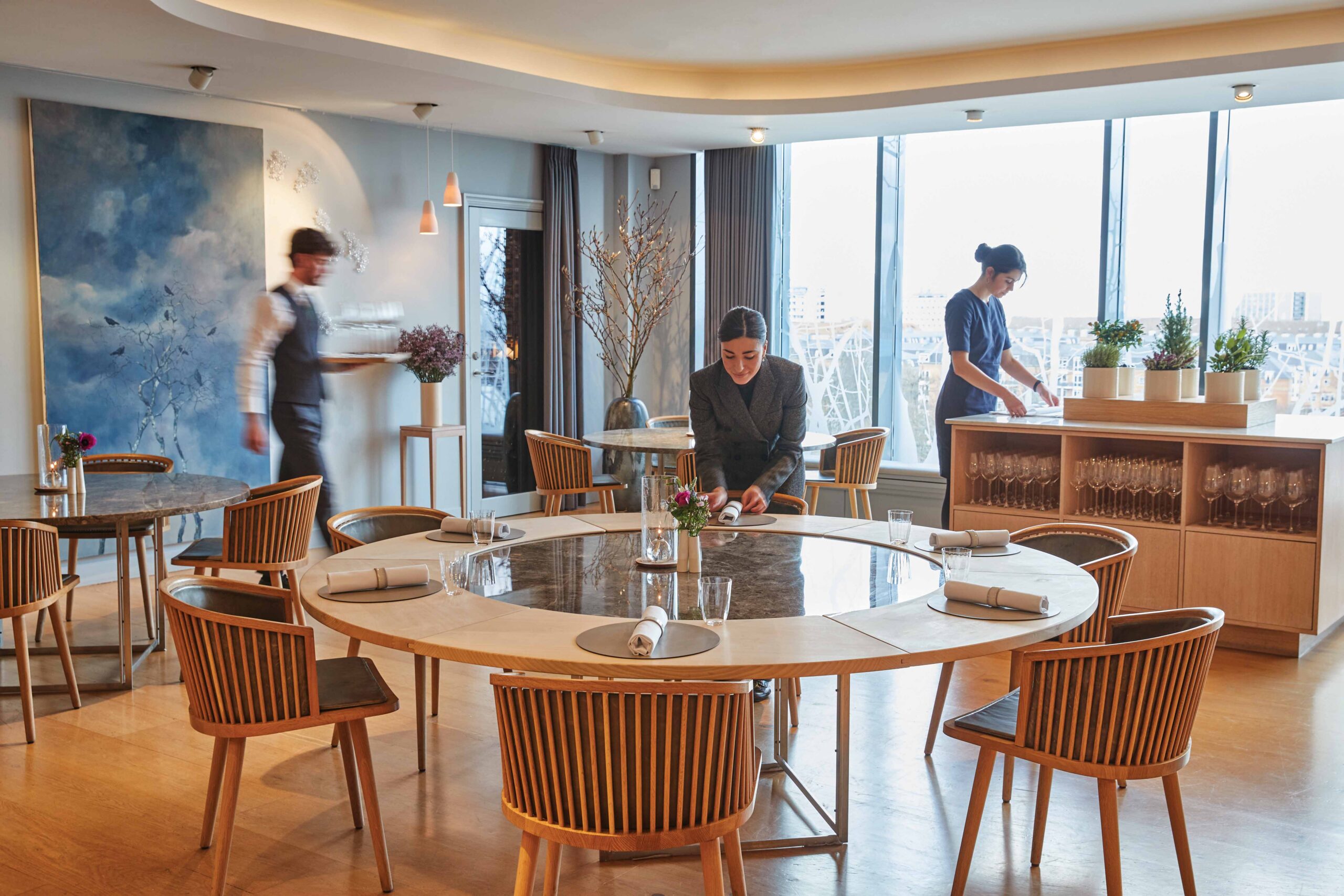
For Søren Ledet, wine director, general manager and co-owner of Geranium in Copenhagen, a dining experience all comes down to bringing people together. “It’s about the moment and who you’re sharing it with. Leaving your phone in your bag or pocket, being present, enjoying the experience, and taking it all in. Making a meaningful memory for yourself – not one created for Instagram,” he asserts.
“In a world where AI is ever present in how people live their lives, I hope we continue to create real, human experiences.”
Another thing that is unlikely to change is the need to stay nimble. “When financial uncertainty increases, guest behavior changes – where they choose to dine, how often they go out, and how much they spend,” he says.
“Over the past six years, we’ve experienced a Covid crisis followed by challenging international politics and many small, independent restaurants have closed or been forced to adapt significantly.” He expects things to improve. “I believe that financial stability will return and as an industry, we simply have to hold on, stay resilient, and continue doing what we do best.”
Non-alcoholic growing into the market
Danish born Majken Bech-Bailey was in charge of the beverage program at the now closed two Michelin-starred restaurant Aimsir in Ireland. She developed a particular interest in non-alcoholic pairings as an alternative to the classic wine pairings, experimenting with tea, kombucha and juices, incorporating seasonal flavors and locally foraged ingredients. She has since launched her own wine alternative, called Bæk.
She predicts that an already growing segment will continue to increase in popularity. “It is more common for a restaurant to offer a non-alcoholic pairing and there are more options on the market today,” she says. “We are also starting to see more functional beverages, which gives the customer more than taste. It is not for everyone but it’s definitely a growing category.”
She believes that we have only just seen the beginning of this market’s blossoming. “There are more and more retailers popping up that sell no or low alcohol and I see a few new distributors that are entering the market with a solid focus on no or low alcohol drinks,” she says.
“I feel we will see increasing numbers of guests asking for these products when they go out for a meal and a drink. And this is becoming a really sophisticated category – it is no longer about just getting something cheap; people are willing to pay for quality and to get an experience.”
Tina Nielsen


