



A restaurant kitchen needs room for the person who will maintain it. Equipment selection and production flow deserve close attention, but service access belongs in the same design conversation. Once a restaurant opens, the technician inherits the decisions made on the drawing. A panel blocked by another appliance becomes an operational problem whenever someone needs to get behind it.
I maintained a nine-location route across Florida and Georgia in the US, working on heating, ventilation, and air conditioning (HVAC), refrigeration, cooking equipment and other building systems. Covering several restaurants taught me to look beyond the failed component. Travel, access, communication and the ability to take equipment out of service all affect the job. In a restaurant operating around the clock, the design needs to support maintenance during real working conditions.
Make service access a design requirement
Before approving a layout, walk through a routine service visit with the maintenance team. Identify where the technician stands, which panels open and what must move. Consider the room needed to remove a component, not only the space occupied by the appliance. A unit fitting into its assigned footprint does not prove someone will have practical access to maintain it.
That review should reach beyond the cooking line. Trace access to refrigeration equipment, rooftop systems, water heaters and utility isolation points. Include the route for carrying tools and replacement parts. Plan where removed panels will go without blocking staff movement. Check the manufacturer’s installation and service requirements for the selected equipment instead of assuming similar-looking units need the same clearances.
Discuss cleaning access with the people responsible for cleaning. An arrangement requiring several appliances to move before one area becomes reachable creates a recurring task, not a one-time installation inconvenience. If equipment moves for cleaning or service, its connections and restraints need to suit that arrangement. Resolve those details with the appropriate trades during design and installation.
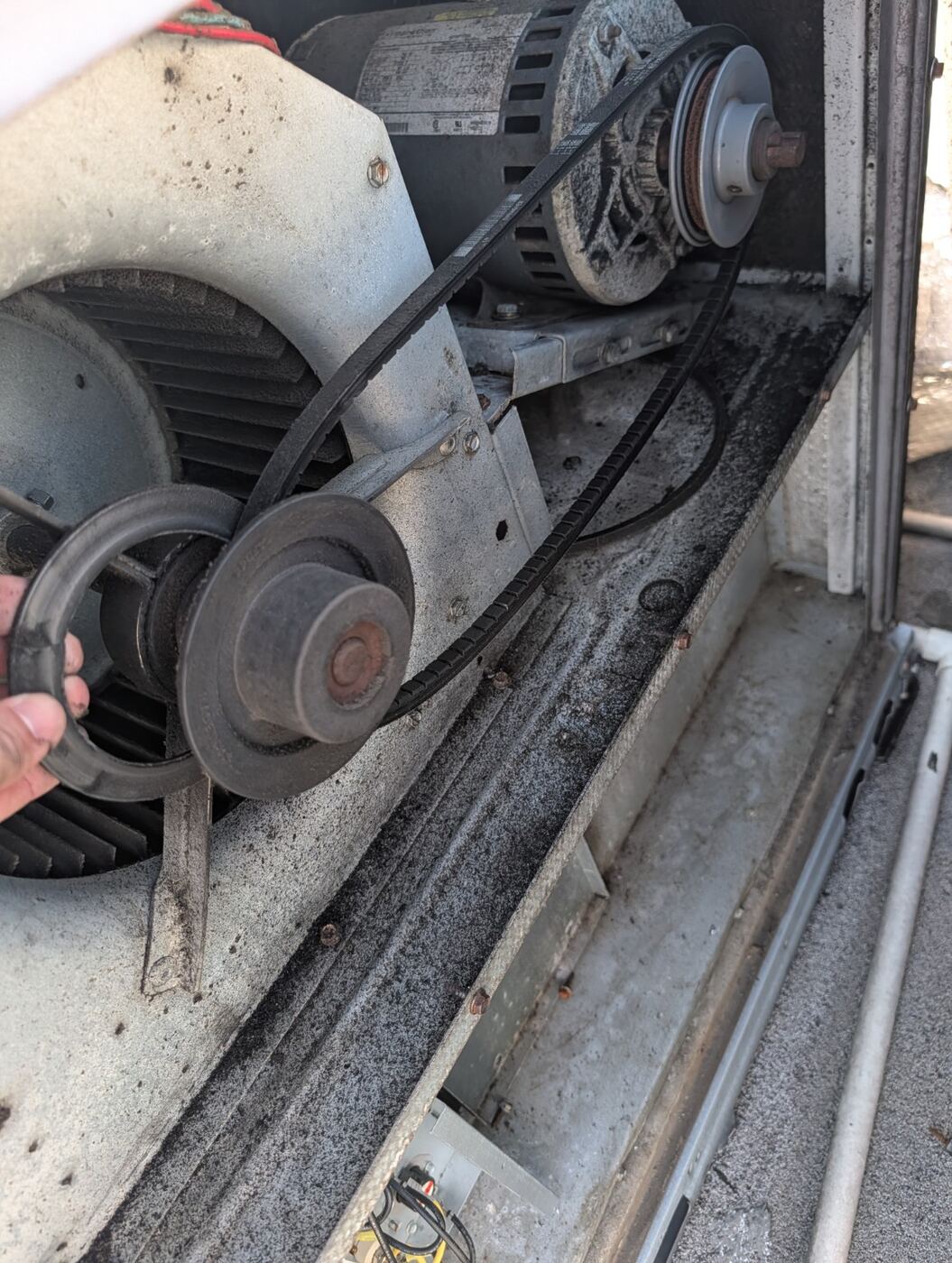
Rooftop HVAC blower-drive failure with the damaged sheave ring visible
Protect the working layout after opening
Even a carefully reviewed kitchen changes. A shelf appears beside an appliance. A storage cart fills an empty corner. A replacement unit arrives with its controls or service panel on a different side. Each change deserves an access review before the new arrangement becomes permanent.
Give managers a usable plan showing spaces needed for service and movement. Include photographs of the intended arrangement at handover. Explain the purpose of each protected area so it does not look like unused storage capacity. When replacing equipment, compare the service requirements along with dimensions and production needs.
Replacement planning also needs a route out of the building. Review doorways, turns and access restrictions before an urgent removal becomes necessary. The people maintaining the site should know which obstructions are removable and who approves the work. Design decisions become more useful when the next technician understands them.

Rooftop HVAC filter-service condition
Hand over information people will use
A stack of manuals offers limited help if nobody knows which model is installed or where the documents are stored. Start with an equipment register tied to clear asset labels. Record the location, make, model, serial number, installation date and warranty information. Keep manuals, relevant drawings and commissioning records connected to the correct asset.
Make this information available to the person handling a call, including after hours. A manager should know where to find the equipment number and how to report the symptom. The technician should have access to previous findings before arriving. A short, consistent reporting process is easier to maintain across several locations than a different system at each restaurant.
Keep observations separate from conclusions. ‘Water under the unit after cleaning’ provides more useful starting information than an unsupported diagnosis. Record when the problem appeared, what the operator observed and whether it has happened before. Photos help when they show the equipment and the relevant condition without exposing customers or confidential information.
Plan the interruption before the repair
Continuous operation does not remove the need for maintenance time. It makes coordination more important. Before planned work, agree on the affected area, expected interruption, access arrangements and the person responsible for communicating with the kitchen team. Discuss what changes if the work takes longer than expected.
The operator also needs a plan for the service the equipment normally provides. A refrigeration repair raises questions about product storage. Work on cooking equipment affects the available menu and production capacity. Those decisions belong in the conversation before tools come out. Technicians need room to work safely, and managers need a clear understanding of what remains available.
Avoid promising a return-to-service time before the fault and parts requirements are understood. Give the manager a realistic next update instead. After the repair, explain what was corrected, what was tested and whether further work remains. A clear handoff prevents an unfinished issue from disappearing when a shift changes.
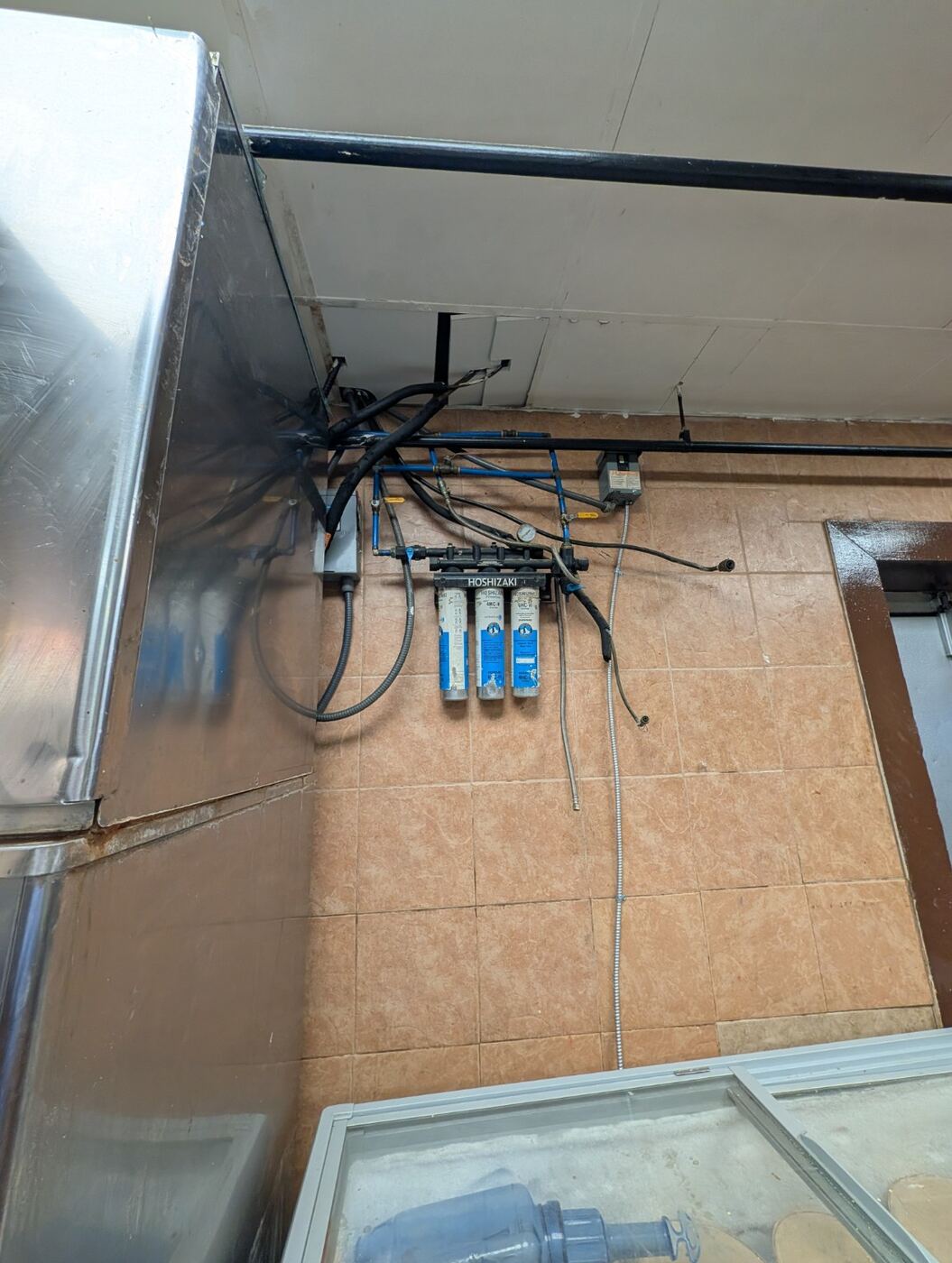
Commercial-kitchen water-filtration and utility equipment
Use repeat calls to improve the next design
Service history should influence future specifications. Track repeat problems by asset and symptom, along with the findings and corrective work. Repeated visits deserve a review of the cause rather than another assumption about the failed part. The issue might involve operating conditions, installation, maintenance access or a separate system affecting the equipment.
Bring those findings back to consultants, operators and purchasing teams. A useful review asks what made the job difficult, what information was missing and which design change would improve the next installation. Include the time needed to reach and expose components when comparing equipment options. Purchase price alone does not describe the work required over the equipment’s life.
Include technicians from the actual service area in that review. They understand local parts availability, travel demands and the practical limits of responding to several restaurants when urgent calls arrive during the same busy shift.
I want maintenance included before the layout is settled and kept involved after opening. Invite the technician to review the drawings, then check the finished kitchen together. Record the remaining concerns and assign responsibility for resolving them. The result should be a restaurant where necessary maintenance has a place, a plan and an informed person on the other end of the service call.
About the author:
Troy Coleman is a commercial HVAC, refrigeration and kitchen equipment maintenance technician with EPA Section 608 Universal certification. His 2026 book, America Runs on Waffles: The Hidden World Behind America’s 24/7 Restaurants, explores the human side of maintaining restaurants through nonstop operations.


