


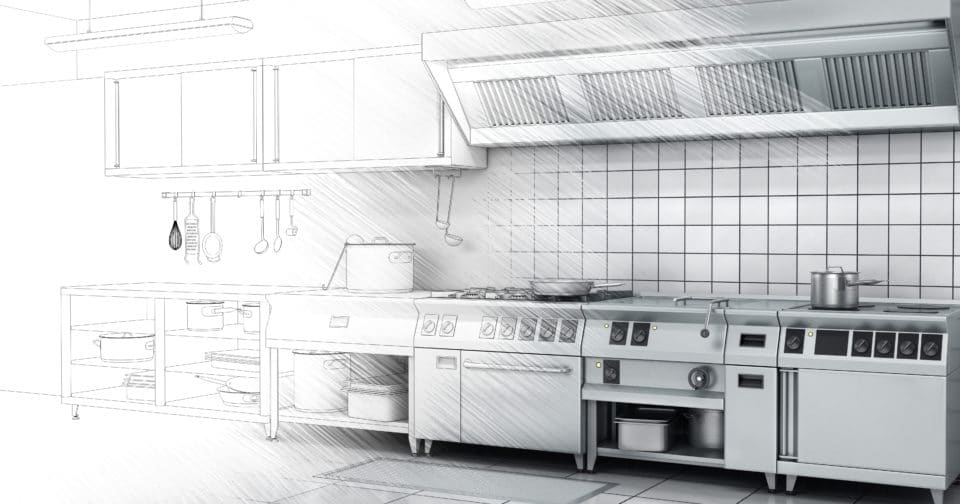
We have all imagined having robots that can do whatever we ask them to do in the kitchen. In fact, a C-3PO type of robot that can do all those basic tasks that you hire unskilled workers to do. But they, of course, would not be the lowest or least skilled model. The robot required to do the most basic tasks without thinking would be a more sophisticated machine than any in the kitchen. Of course, we are talking about a humanoid robot and not a single purpose unit(s) that you could be using to fry or make coffee. These are specialized robots that are delivering measurable value today, proving dependable automation outperforms humanoid ambitions in real-world manufacturing environments.
For years the assumption was that we needed smarter robot brains. In fact, the brain is now the fastest-moving part. Our most pressing challenges with robotics have moved into the body: dexterity, reliability and a data problem with no internet-scale shortcut.
The reasoning layer has moved further than most people realize. Modern vision-language-action models, which map what a robot sees and can act upon, borrow their backbones from the vision-language models that power frontier multimodal LLMs (Large Language Models).
The reasoning isn’t finished, but it’s no longer what holds robots back. Even the researchers most bullish on cognition aren’t spending their money on the reasoning gap. What stands in the way is getting a body to act on that intelligence with proper precision and consistency, and to be able to learn from the data that emanates from those actions.
Being valuable at scale
Machines that look nothing like C-3PO already do valuable work at scale, precisely because they refuse to be general. They are purpose-built machines designed, for instance flipping a burger, to do the one task with 100% accuracy.
Human hands have more than 20 degrees of freedom and coordinating contact-rich manipulation across them is still unsolved at production reliability. Most real-world applications still run on simple parallel-jaw grippers. In-hand manipulation—repositioning an object within a grasp—remains an open challenge.
The same learned policies that pick objects reliably tend to drop toward zero on contact-rich tasks like standing a cup upright or stacking items. The bottleneck is not only the control policy, but the hardware: tendon-driven multi-finger hands break and are hard to calibrate.
Even where the hands are good enough, the bar that prevents deployment is not capability. It is reliability. A policy that succeeds 80% of the time is a great demo video. A warehouse or a kitchen needs to be measured in nines, across millions of cycles, including the long tail of weird edge cases. The gap between “works in the demo” and “works unattended in the kitchen all day without a hitch” is a long way off.
Unlike dexterity and reliability, data has no internet-scale shortcut. Language models had the internet; there’s no equivalent in robot actions. The workaround is the “data pyramid”: a little real-robot teleoperation at the top, a large layer of simulated and synthetic data in the middle, and web-scale human video at the base.
The importance of operational data
A second data problem arrives the moment a machine ships: operational data, not training data. Training data must be manufactured; kitchen operational data is a firehose that never stops. The internet trains the brain; reality trains the body.
The learning loop everyone counts on runs entirely on that exhaust, yet its infrastructure is far less mature than the models it feeds. The teams who treat telemetry as core infrastructure early in the process are the ones not required to rebuild it under load later. Constrain the task and every bottleneck above gets smaller. The pattern shows up wherever a team has shipped something narrow enough to be reliable.
Warehouses got there first. The lesson of 2025 was that reliability beats novelty. Fully autonomous picking across the entire SKU range is still unsolved at the level that replaces a human picker. But strip out the variability—grocery distribution, pallet handling, sortation—and the same systems scaled faster than almost anyone predicted.
C-3PO is coming, just not first and not soon. The answer now is a capable mind riding a narrow, dependable body. The robots we’re actually ready for are already flying over our neighbourhoods, running our distribution centers and reading gauges in places that humans prefer to avoid.
The general-purpose robot usable in the kitchen will come. The real question is are you designing anything while you wait? The new kitchen that you are designing and building today might be around in 20 or even 30 year’s time. Do you consider what will be necessary to incorporate today, for a time in a decade, when C-3PO is a real option for the kitchen?
Tim Smallwood FFCSI


