


If AI is not yet ubiquitous in commercial kitchens, it soon will be. AI-enabled systems to minimize food waste, ensure safety and automate cooking tasks are starting to transform back-of-house operations from manual to data-driven processes, helping businesses cut costs and, on the surface at least, improve sustainability.
The uses of AI in foodservice are constantly evolving. Burger King has opened up a new avenue with the rollout of its ‘Patty’ AI-enabled headsets in around 500 US locations. Among other things, they monitor customer interaction and assist with inventory management. The technology creates ‘friendliness scores’ by detecting words like “please” and “thank you” in drive-thru interactions, and helping staff to answer questions. The potential impact of such applications is huge, but AI, and other digital systems, come with a carbon cost that has, for now, remained largely hidden.
Estimates vary greatly, but there is little doubt that a ChatGPT search requires more energy than a Google search. The latest report from the International Energy Agency (IEA) shows capital expenditure of the world’s largest tech companies exceeded $400bn in 2025, much of it going into data centers, and that figure could grow by a further 75% this year. Electricity demand from data centers soared by 17% in 2025, with that of AI-focused data centers climbing even faster.
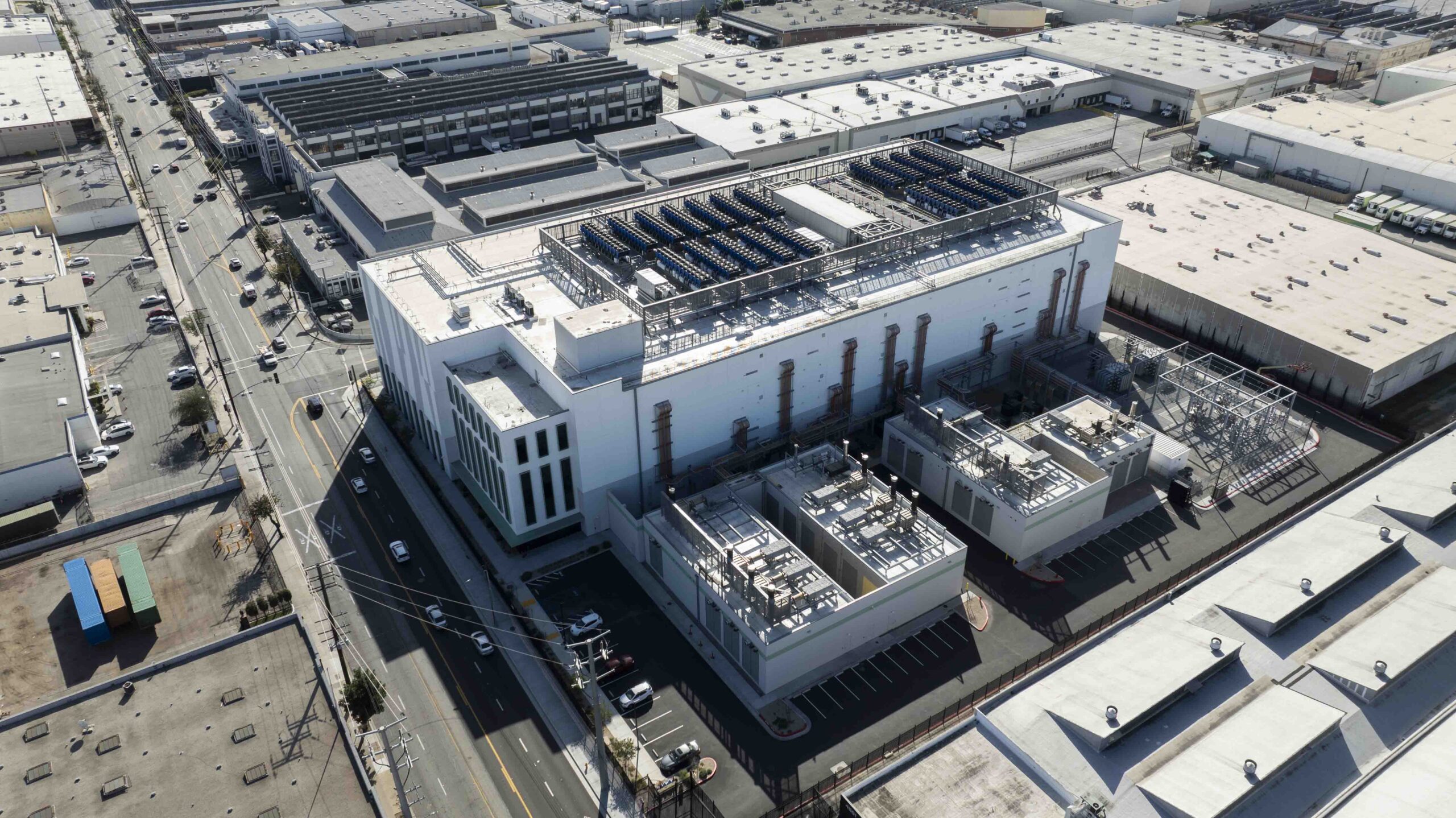
All digital systems have a strong draw on data centers, driving a carbon footprint from electricity to run servers, power and water used to cool them, and the carbon embedded in the hardware and buildings.
Stefani Bardin of Unstuck Innovation, who helps foodservice and food manufacturers develop leaner digitally enabled operations, explains that the kitchen-related digital systems carrying a footprint are “anything routed through a data center: point-of-sale, inventory and ordering platforms, internet-connected equipment, camera-based waste systems, energy dashboards, sustainability reporting software, and any AI built on top.”
This may seem like adding more to an already heavy burden of sustainability, for which the agenda keeps changing. “It’s fairly new given the exponential rise in digital adoption,” says Terri Brownlee, director of nutrition and wellness for Bon Appétit, an on-site restaurant company based in Palo Alto, California. “First, you had digitalization, cloud adoption, big data, and now AI, and the proliferation of data centers, all within a little over a decade. Foodservice is trying to understand the effects of AI and assess the effectiveness against the cost.”
Mitigating factors
Digital carbon can be a difficult topic – it affects all industries, not just foodservice – and there is no obvious path to mitigation.
“I’ve been seeing a lot of information lately about the harmful or negative impacts of data centers as they are popping up everywhere,” says consultant Renee Palmer FCSI, associate principal at FoodSpace. “As a society, we are not having enough of the tough conversations about data centers. I love AI, but I love our communities and the earth more.”
So, how can digital infrastructure fit into a sustainability strategy? Until there is an exact method for measuring it, the answer remains unclear. “It’s possible to measure almost anything with enough money or patience,” says Brownlee. “The data on energy and water consumption varies and is based on average estimates under specific conditions, so accurate regional assessments would be difficult, but not impossible. I believe in the near future we’ll have access to more regional-specific data.”
Any commitment to reduce carbon footprints first requires an understanding of which AI tools are most impactful. “Companies will have to determine the cost of the AI impact, as well as the entry cost of deploying physical equipment and the life cycle of that equipment,” Brownlee adds. “Discuss it early and often in the design process. For these digital systems to work, they must have strong, fast, and reliable connectivity – without that, nothing else works.”
Bardin highlights several ways in which operators could possibly reduce the potential for digital carbon emissions. The first is procurement – choose vendors with credible renewable energy commitments and self-elective transparency reporting. Next, avoid real-time processing when daily reporting will do; consolidate platforms and purge stale data. Finally, net-benefit accounting – ask explicitly whether AI cuts more emissions than it creates.
“AI-powered sustainable kitchen claims will not hold up to outside review if the digital footprint is invisible,” she adds.
Although sustainability has become a major focus in foodservice over the years, digital carbon is only just starting to appear on the radar of manufacturers and their clients. For now, the focus is on energy efficiency at the point of use and, possibly, the growing issue of embodied carbon.
“We are all becoming more aware of the higher energy consumption associated with AI queries compared to traditional web searches,” says Detlef Rank, director consultant management at Rational. “Personally, I also struggle to see a broader societal benefit if additional power plants are needed simply to mine new bitcoins. But when it comes to AI in commercial kitchens, the picture is different.”
In this context, he believes the positive effects outweigh the additional energy consumption required. “Just to put that into perspective, our IT’s CO₂e footprint – covering only externally procured energy – accounts for less than 0.05% of our overall corporate carbon footprint,” he points out.
A delicate balance
These comments align with the IEA report in hinting at an intriguing balance. Power usage per AI task is declining, with efficiency improving at an unprecedented rate. However, more people are using AI, and increasingly for energy-intensive uses such as AI agents. Electricity consumption by data centers is set to double by 2030, and power use from those focused on AI could triple.
“The benefits could outweigh the costs, though you can’t dismiss costs when you talk about the human impact on people’s communities and lives of building data center infrastructure,” says Nahum Goldberg FCSI of NGAssociates Foodservice Consultants. “AI can reduce carbon emissions in some ways – food waste would be the best example, but also demand forecasting, inventory and energy optimization. The balance between emissions saving at an operational level and an increase in digital carbon at data center level should not be overlooked and warrants a holistic, human, and environmentally conscious approach.”
Digital carbon has only just appeared over the horizon, but is set to become a central issue in foodservice.
While it may not yet be at the top of every consultant’s agenda, it should at least be on the list of priorities.
Jim Banks


