


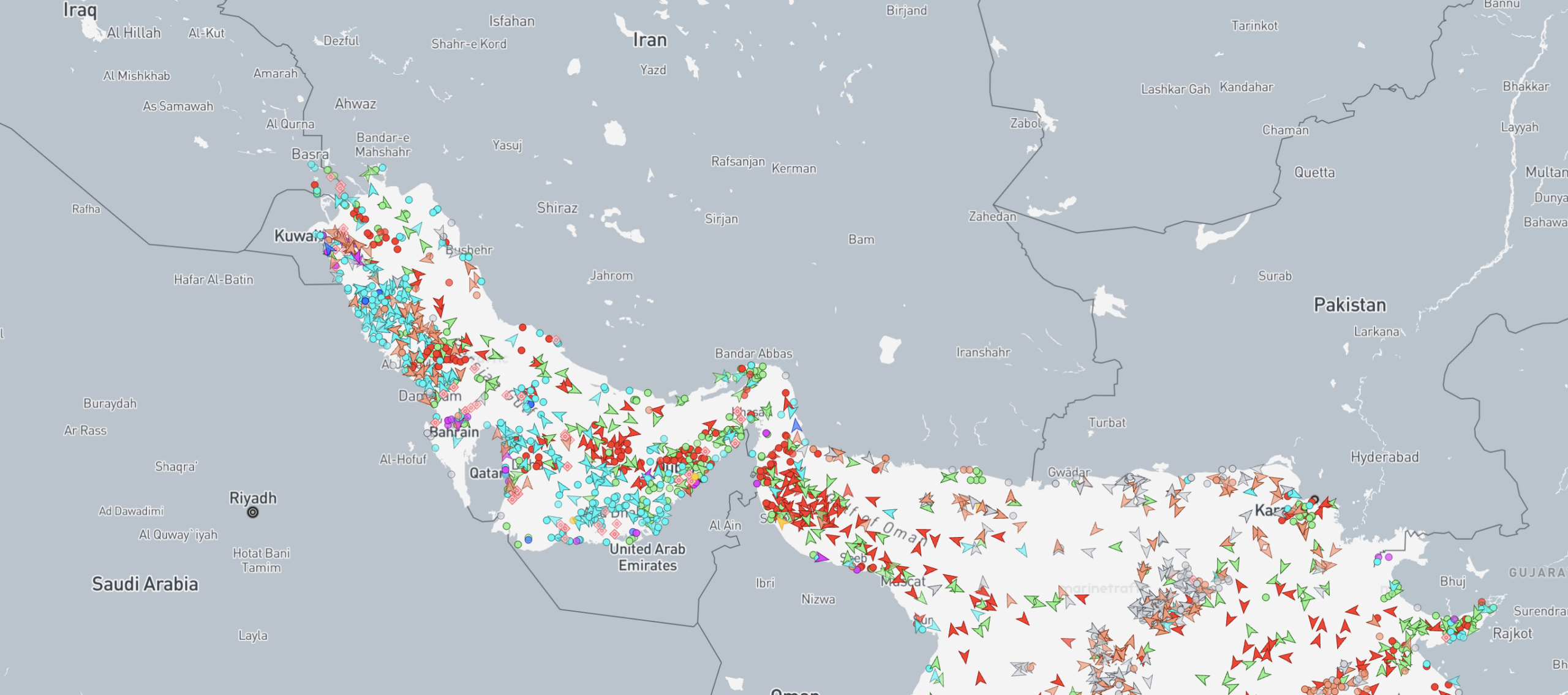
Few people outside of the global shipping, energy and logistics sectors were hitherto familiar with the significance of the Strait of Hormuz for world energy trade. But in recent weeks, it has become something of a household name. In the Iran war, the Strait was blocked under Iran’s military control on 28 February 2026, in retaliation to attacks from US and Israel, preventing 20% of the world’s oil and gas from passing through the Strait, according to the BBC, for several weeks.
But the blockade did not limit only oil and gas. Fertilizer, comprised of urea, ammonia, and potash commodities, an essential product for growing the world’s food supply, is a critical freight that also passes through the Strait. Current prices for fertilizer are surging by 30%, according to the Fertilizer Institute, driving food prices up accordingly.
Leading Australian economist Steve Keen, who predicted the 2008 financial crash, issued a warning on Monday that without synthetic fertilizers, the Earth could sustain only 1-2 billion people: “20-30% of our fertilizer comes through that region, through the Strait of Hormuz. If we lost 20% of the world’s fertilizer, we’d lose roughly 20% of the world’s food, and it would cause a global famine.”
Following a US military campaign to open the strait, and multiple threats to Iran’s infrastructure, a temporary ceasefire was called to encourage Iran’s opening of the strait, but several events have seen the terms of this breached. US President Donald Trump then blockaded the Strait to halt economic trade in and out of Iran by sea, which fuels 90% of Iran’s economy, claiming the US military has ‘maritime superiority in the Middle East’. Tehran has said it will use alternative ports to those in southern Iran to bypass the US blockade on the Strait, semi-official Iranian news agency Mehr News says.
While unblocking the Strait will buffer wider catastrophe, what comes next remains unclear, particularly as the promise of resolution also remains uncertain.
“Restarting production and transport for fertilizers and their components after a shutdown of this scale takes weeks,” said Ben Gregoire FCSI, founder and principal of LEVELS, a hospitality strategy and creative agency based in Kuala Lumpur and Dubai, and immediate past chair of the FCSI Asia Pacific Division. “Timing of planting crops is critical, and this is a delay that farmers simply don’t have ahead of peak planting windows. If the Strait remains constrained through April and May, the knock-on effects on yields and food prices will be felt well into 2027.”
Uncertainty looms
Although the initial effects were mostly localized in the Middle East, the situation has evolved profoundly. Keen highlighted that Australia holds only 30 days’ worth of oil supplies. When that fuel runs out, food can no longer be transported from the farmland to cities. The Philippines was the first country to declare a state of emergency, as it imports 98% of its oil from the Middle East. India is also the world’s second-largest user of fertilizer after China, while almost 60% of India’s natural gas imports came from the Gulf in 2024.
Short-term impacts will see pressure on commodity input costs for operators, as fertilizer prices directly impact produce pricing with a short pipeline.
“The compounding effect is the bigger story. Fertilizer costs, energy costs, and logistics costs are all moving simultaneously,” said Gregoire. “Operators who manage to absorb the first wave of price increases may find that the second wave — delayed crop yield impacts arriving in Q3/Q4 — pushes them past the point where menu price increases can cover the gap without damaging guest volume.”
Indeed, the energy-intensive nature of the food and hospitality industry warrants increased operating and food costs across the entire value chain, from production and agriculture to packaging and transportation. With the fertilizer shortage impacting the spring planting season in the Northern Hemisphere, yield reductions will be present in food prices later this year.
“For the foodservice industry specifically, a prolonged disruption changes the calculus on menu design and supplier diversity,” says Gregoire. “Operators who have leaned heavily on a narrow base of ingredient suppliers — which is most operators, because it’s more cost-efficient — will find themselves without alternatives. In Asia, that risk is acute as Southeast Asian granular urea prices have already jumped over 40% since the conflict began, and the region’s agricultural producers don’t have the same financial cushions as their counterparts in North America or Europe.”
A harsh reality
The message is clear: current stocks will buffer the near-term blow, but significant food inflation looms if the Strait remains blockaded. The foodservice and hospitality industry could see ramifications for years to come, with menu price increases as early as mid-2026, and further yield effects and fertilizer shortfalls in 2027.
“When we talk about rising restaurant prices, we are speaking from a position of considerable privilege,” urges Gregoire. “The operators I work with will find ways to adapt — they always do. What I’m more troubled by is the broader human cost. The impact of this is that tens of millions of additional people could face food insecurity by the end of 2026 if this conflict persists into mid-year. In regions across sub-Saharan Africa, South Asia, and parts of Southeast Asia, farmers were already operating on the margins before this crisis. For them, a 40–50% spike in fertilizer costs isn’t a business problem — it’s a decision about whether to plant at all.”
With global food systems already fragile, this evolving story may only make headlines once its impacts have already taken hold, mostly affecting those who had least to do with causing it.
Lauren Hurrell
Image: Marine Traffic
This is a rapidly changing story. Details are correct at time of press.


