


It is one of the big conundrums of our time: how to reduce the proliferation of unsustainable plastics. In foodservice – an industry that has seen exponential growth in food for off-premise consumption – this question is even more pertinent.
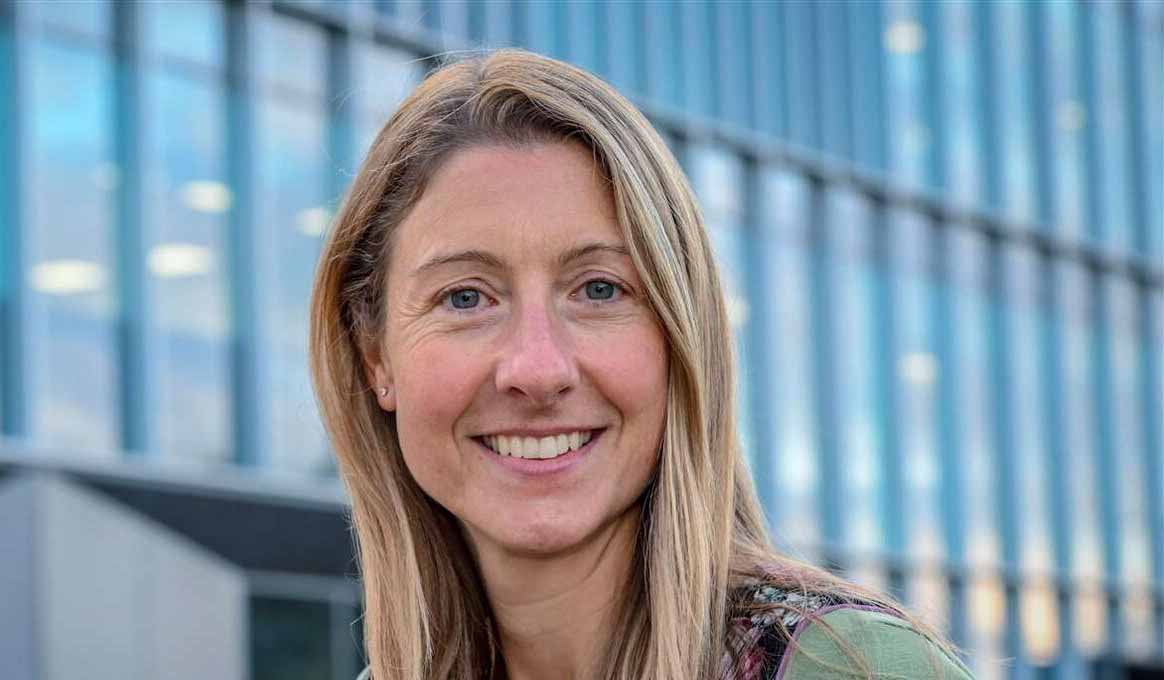
Joining the conference from Cambridge-based materials innovation company Xampla, CEO Alexandra French will outline how a small start-up has taken on the significant challenge of reducing single-use plastics through innovation. The company develops plant-based alternatives to single-use plastics and microplastics and has made strides in the foodservice industry.
French joined Xampla in 2023 at the stage “where we were going into our commercialization phase”, she recalls. She comes from a background in chemicals – previously, her work focused around emission control for cars and greenhouse gas abatement and she later went on to run a business for battery materials for vehicles.
“I started in big corporate and moved into the startup world when I joined Xampla, but there’s always been that thread of a cleaner, healthier planet at the heart of my career,” she says.
The technology at the core of Xampla – Morro – was developed at the University of Cambridge where Marc Rodriguez García, the company’s co-founder and CTO was doing his post-doctorate degree. The name derives from ‘tomorrow’ hinting at the focus of the team.
“Morro really came about by looking at plants, taking materials from nature,” says French. “We are not doing anything chemical when we create these materials that have fantastic functional properties. They are completely plastic free, PFA free, and microplastic free.”
To develop the product as it is today, García started out studying spiders and the strength of silk. “Silk, by weight, is five times stronger than steel – it doesn’t get battered in a rainstorm. So he was looking at how this material in nature is so functionally fantastic,” she says. Learning from the silk protein molecules, he applied it to plant protein to create Morro.
From concept to commercial reality
García developed the technology and spun out Xampla in 2018; the first employee joined in 2020. In the six years since, the technology has evolved greatly into a real tangible product today.
Morro is implemented as a natural liner in boxes, cups and containers used for carrying food. “During the development work the team found that these plant materials had really great properties, including grease barrier and water barrier properties and heat sealability,” explains French. “And then they looked to how these can be applied in industry.”
Today, that work is being put into practice through Xampla’s partnership with delivery company Just Eat, which began in 2025. Delegates at the FCSI EAME Conference will hear more about the partnership during French’s presentation, where she will share examples of how the technology is being used.
“I am really excited to share the science behind our materials with an audience of foodservice professionals who will understand the scale of the problem with plastics,” she says. “The industry can’t move away from plastic if there isn’t an alternative for them.”
Packaging producer Huhtamaki saw the potential in Morro and the partnership has resulted in Just Eat launching Huhtamaki-produced packaging featuring Morro coating, first in Germany. Roll-out to 10 additional European countries was recently announced. “This is not an idea in the lab, this is a real-life example and this partnership is validation that it really works,” says French.
Having started out with a focus on encapsulation and films – finding plastic-free ways to create containers for materials such as detergents – a growing demand in the market for sustainable coatings caused the company to pivot.
“There is a big trend in packaging with a move away from plastic toward paper, but you need to have those functional properties,” she explains. “If you put wet salad in a paper box it won’t last; you need those barrier coatings to enable the move away from plastics.”
The challenge is significant and the figures are staggering, if not unfamiliar. Every year, says French, there are 400 million tonnes of plastic produced. “It is not all for foodservice, but 40% of it is for packaging. Again, that is not all foodservice packaging but plastic in food packaging is a big issue,” she says.
It is often cited that the vast majority of all plastic ever produced has not been recycled and billions of tonnes still exists on earth. “This is one of the problems we face, especially when we’re talking about foodservice – you don’t need your packaging to last hundreds of years,” she says.
But it is clear that the industry and consumers want to move away from single-use plastics. “A really high percentage of consumers will actively choose takeaways with sustainable packaging,” she says.
Another pressure comes around fossil fuel materials, as the price of oil directly impacts the price of plastic, which leads to increasing costs in the products it is used for. “So having materials that are not reliant on fossil fuels is something else we’re seeing as well,” she notes.
It is estimated that there are hundreds of billions of items of foodservice packaging used every year and getting on for a trillion-odd sachets – the numbers are big and the small company from Cambridge has big ambitions to match. “Our target is to replace 10 billion items of single-use plastic over the next five years,” says French. “The potential impact we can make is huge.”
Tina Nielsen


