


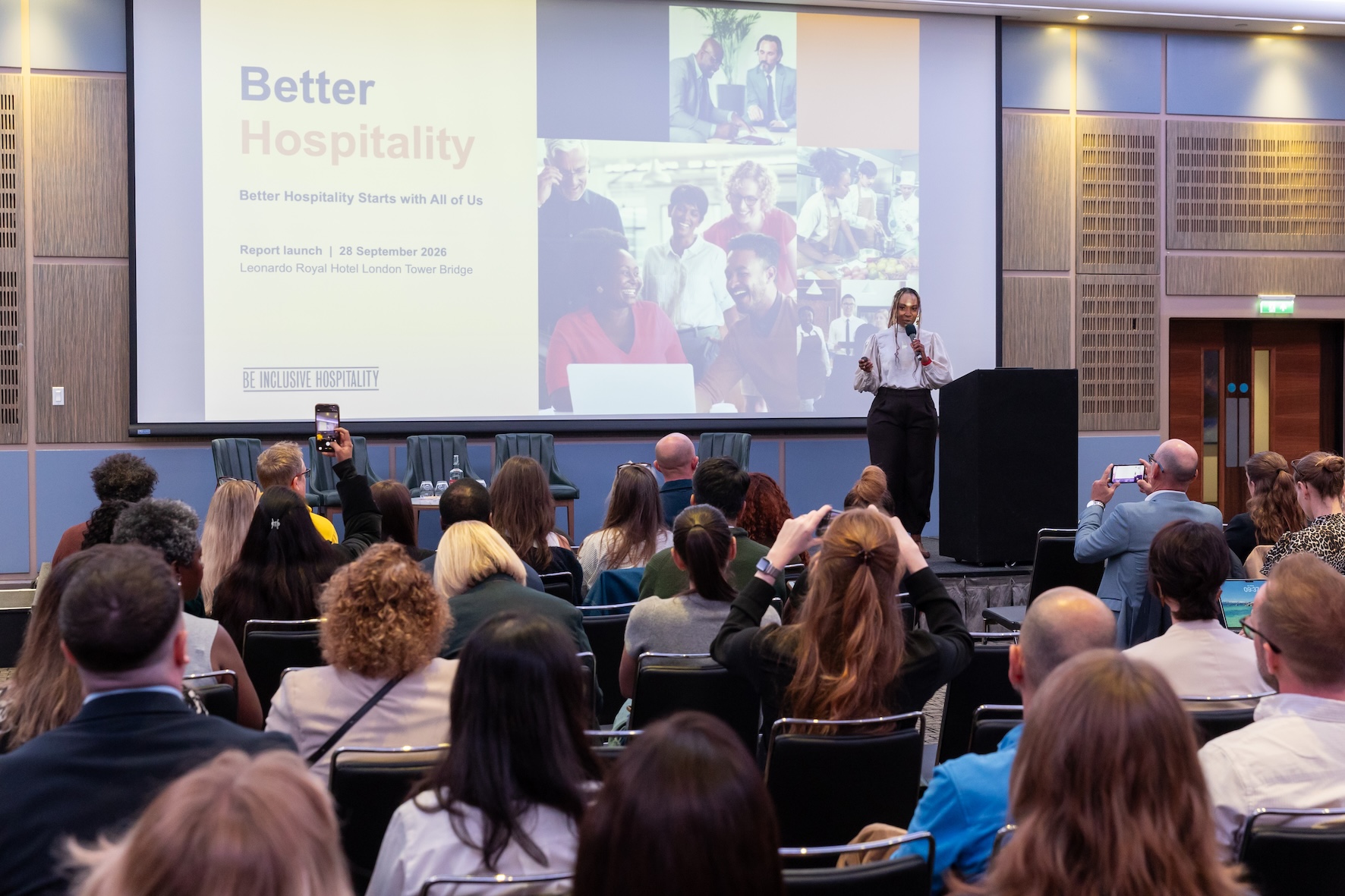
On Monday 28th September, Be Inclusive Hospitality invited members of the UK hospitality industry to hear the outcomes of the new Better Hospitality Report 2026.
Hosted at Leonardo Royal Hotel in Tower Bridge, London, the morning included a welcome briefing by founder and CEO of Be Inclusive Hospitality, Lorraine Copes, followed by a panel of key industry figures including Junior Lewis, client director at Caterer.com; Gina Knight, head of people at Flat Iron; Gemma Eley, people director at Hawksmoor; and Karen Bosher, Portfolio non-executive director and leadership group member. The panel was hosted by culture consultant Alya Lilani.
Now in its sixth year, the report explores pay, progression and workplace experiences across UK hospitality, with a focus on race and ethnicity. Drawing on responses from 405 employees and insights from senior industry leaders, it sets out six key priorities for a more inclusive and equitable industry: data, resource, training, representation, policy and collaboration.
Copes described Better Hospitality as “our answer and response to the current status quo of our industry”.
More than half (50.1%,) of hospitality employees surveyed reported little or no meaningful action on fairness and inclusion at their current place of work, according to the 2026 report.
The perfect storm
The foodservice and hospitality industries are facing a “perfect storm” of pressures. More than 100,000 employees have lost their jobs in accommodation and food services since 2023. Following the April 2026 National Living Wage increase, 60% of employers reduced their headcount plans, and 43% specifically reduced entry-level recruitment.
Yet employers are still competing for skills, with 44% saying finding candidates with the right skills is their greatest recruitment barrier. Meanwhile, 80% of hospitality workers surveyed were open to new opportunities, despite 84% reporting satisfaction with their current employer.
Employee insights
In the report employees across a range of identities, career levels and lengths of service share their experiences. The action they selected most often to support inclusion and fairness was clear promotion criteria (48.6%). Only 26.7% said career pathways were clearly defined and accessible to them, and 21.1% of ethnic minority respondents believe they have been overlooked for progression because of their identity, compared with 6.4% of white respondents.
Junior Lewis, client director at Caterer.com, said a workplace should be a “space to grow, to thrive, where there’s equity and development”. “People say we’re the ‘most diverse industry on the planet’, but at what level?” he asked.
A lack of accountability was the most frequently selected reason why unfair treatment persists (41.5%), followed by managers lacking the skills to recognise it (38.8%) and limited commitment from senior leaders (36.8%).
The loss of talent was the most frequently identified impact, selected by 57.3% of respondents. A quarter were already looking for another hospitality role or planning to leave the industry altogether. Respondents also cited poor mental health and reduced team productivity as consequences of unfairness or exclusion.
A better industry
The Leadership Group brought the operational insight needed to understand where employers can act on the experiences the employees shared. The six priorities give employers a shared, structured direction, recognising that organisations differ in size and resources, with the aim of moving from understanding the challenges to taking informed action.
“We are being squeezed more, but data can help to target where your resource sits,” says Gemma Eley, people director at Hawksmoor. “The biggest thing for us is engagement surveys.”
“Resource is important, because once you’ve got the data, who’s going to implement change?” adds Lewis.
“Sharing data helps to spark change. Insights into the business allows us to make better change, and a better return on investment of where you spend your time,” said Gina Knight, head of people at Flat Iron, while underlining the need for integrity in how that data is used. “You have to be really sure on where it’s going… and that we’re using it for the right reasons, to draw the right conclusions.”
The real richness of the industry will be delivered when diversity is considered at the big-thinking level, bringing commercial benefits too, said Karen Bosher, Portfolio non-executive director and leadership group member. “What you permit, you promote… When businesses get messy, DEI (diversity, equity and inclusion) is the first thing to go,” she said, urging the audience to find creative ways to keep it alive in their organisations.
The report calls on employers to join a sector-wide commitment to race inclusion, name a senior lead and report every six months on their starting point, plans and progress.
“I want there to be a time where we needn’t exist,” says Copes, looking ahead on the goals of Be Inclusive Hospitality. To make a better industry is the goal of the collective journey.
Lauren Hurrell
For more insights, download the report on the Be Inclusive Hospitality website.


