


Held across two days and now in its 27th edition, the annual European Foodservice Summit has become a must-attend event for hospitality executives across Europe. This year the event was staged in Madrid, Spain, between September 16-17 and saw 250+ decision-makers attend from more than 25 countries.
Topics on the agenda included the macro-economic and geopolitical impacts affecting the continent’s restaurant sector and changing dining behaviors, plus case studies of growth, turnarounds and international expansion. AI, automation, brand building and new culinary concepts were also addressed by a first-rate program of speakers, moderated by Summit organizer DFV Mediengruppe’s Katrin Wissmann and 1473 Media’s Michael Jones.
The day prior to the Summit, attendees were treated to ‘Tuk Tuk Trend Tours’ of Madrid, taking in examples of quick-service, full-service and coffee & bakery concepts in the city. The tours were guided by hospitality experts including foodservice consultant Marta Cebrián López FCSI and F&B brand specialist and trendwatcher, Julia Chesnokova. Two workshops also took place, focusing on ‘Pricing’ and ‘International Expansion’, hosted by Philipp Laqué of RMS Revenue Management Solutions and Vincent Mourre of WhiteSpace Partners Ltd, respectively.
The magnitude of recent shocks
The morning session of day one of the Summit saw Luis Martín Izquierdo, of the Regional Ministry for Culture, Tourism and Sport,Comunidad de Madrid, present on the city’s position as a driving force for innovation, talent and international collaboration in a sector that is essential to its economic growth.
Marcos Casarin of Oxford Economics followed this with an engaging keynote addressing the forces shaping today’s global economy. From global conflicts, shifting trade patterns, to geopolitical tensions and demographic trends, the session highlighted the biggest pressures and uncertainties facing the sector, and offered clear and practical insights for growth. Inflation will continue to remain high in 2026/27, said Casarin, so “there will be less budget available for discretionary spend,” while wages and borrowing costs will remain elevated in 2027 as the magnitude of the recent geopolitical shocks continue to hit.
“Consumers will have to pay more – there’s no real hiding from this,” he said.
Positively, however, tourism will remain robust in 2027, Casarin noted. Consumers are still prioritising eating out, but on less high-volume meals. And there are plenty of success stories around Europe. “Look no further than Spain,” he said, noting the country’s growth potential in the out-of-home dining sector. Central and Eastern Europe, and Scandinavia remain other bright spots away from the other ‘Big Five’ markets of Germany, the UK, France and Italy, which continue to see reduced/slower growth.
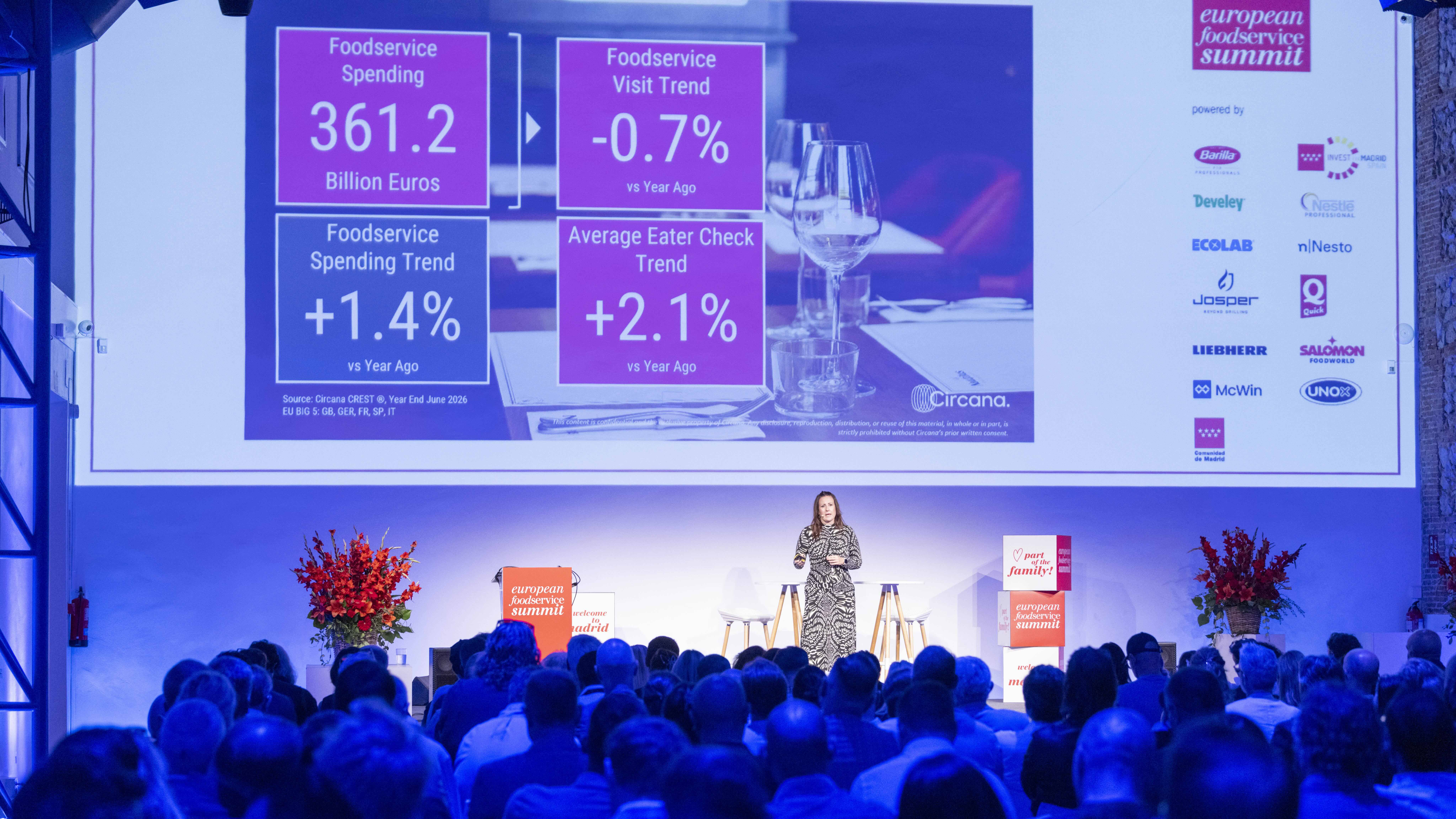
Edurne Uranga of market research company Circana, looked at how generations are reshaping Europe’s dining behavior. “Europe’s foodservice market has reached €361.2bn in annual spend, yet this relatively stable headline performance is concealing a fundamental shift in who is driving the market and what they expect from it,” said Uranga (pictured, main shot).
“Consumer behavior is evolving beneath the headline numbers,” she said, noting that across the five largest European foodservice markets – the UK, Germany, France, Spain and Italy – spend increased by 1.4% in the year ending June 2026, even as visits declined by 0.7%.
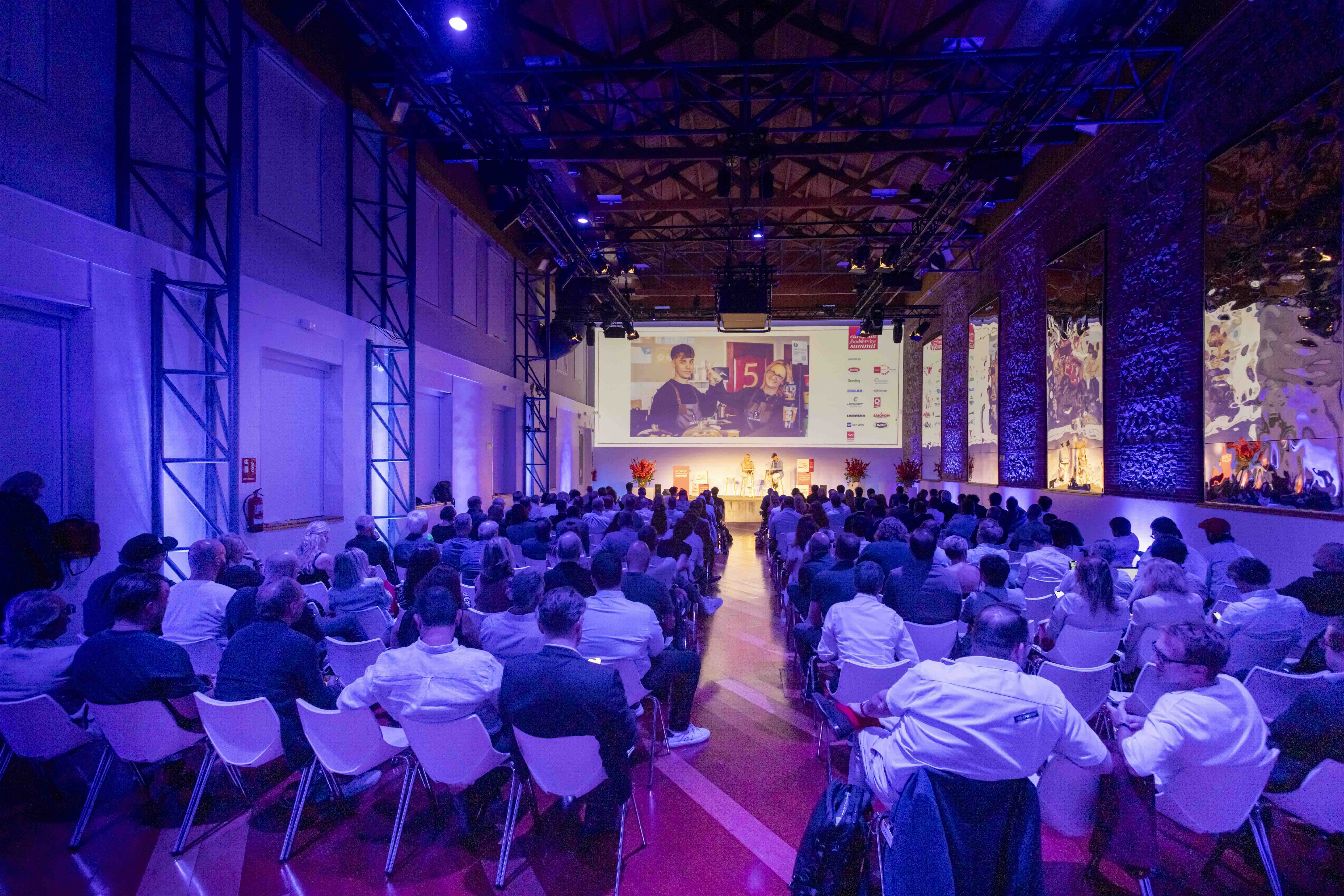
A fireside chat session saw Walter Seib, CEO of Avolta Northern, Central and Eastern Europe, saw interview Inês Lima, managing director of McDonald’s Spain (pictured, below) to share perspectives on growth, value, efficiency and innovation at a global scale. “Good ideas travel fast,” said Lima when asked about the brand’s ambitious roadmap to scale across Spain while balancing rapid footprint expansion with the operational challenges of maintaining consistent supply chains and staffing levels.

Also on day one, leading French burger brand Quick’s CEO Frédéric Levacher told its European growth story, while Prezzo Italian’s CEO James Brown Italian’s discussed the chain’s turnaround in a lively discussion with Andreas Karlsson, group CEO of Sticks’n’Sushi.
The afternoon saw two speakers address the role of AI in the foodservice sector. AI-thought leader Dr. Theo Ackbarow, executive chairman of EFSS educational partners Nesto Software presented on how to leverage AI to build a scalable, near-zero-admin operating model in hospitality. This was followed by an enlightening session from Dr. Marc Schumacher, founder of the Silent Knowledge Institute, on whether markets really understand consumers anymore, and the dangers of over-digitalising the consumer experience. “Customers have changed more in the last three years than in the previous 30,” noted Schumacher.
The power of storytelling
Independent board director, RemCo chair and strategic advisor Marta Pogroszewska interviewed Radu Savupol, CEO of Romania headquartered 5 To Go, discussing the coffee chain’s rapid expansion, modern food brands – and the role of experience in hospitality. Lasse Andersen, founder of Denmark-based Grød, the world’s first porridge bar, was another new concept to present. In a deeply personal account of how he has grown the business, Andersen shared his story of the sacrifice and dedication often required to succeed in the hospitality business. “But a good simple product will sell itself, so stick to your core values,” he implored.
Closing keynote Steve Tatham, chief creative officer of MDSX and a former Walt Disney Imagineer, presented on the topic of ‘Bringing theme park magic to the table’, explaining that dining is no longer just about food, it’s about experience. “Embrace the power of storytelling where your guest is always the hero of every story,” said Tatham.
Following a fabulous evening at Finca El Gasco, beautifully situated in the hills near Madrid, day two of the Summit began with a presentation from Azadea Group, a leading lifestyle retail operator in the Middle East and Africa. Duncan Muir, F&B leader at Azadea Group then addressed the subject of ‘Building resilient hospitality brands in the Middle East’ on stage with Jones, taking in the operational challenges being experienced in the region, alongside the opportunities that are available.
Candid conversations
This was followed by a series of Executive Roundtables, which brought together small groups of participants, each guided by expert facilitators to spark meaningful, candid conversations. It proved to be a superbly immersive form of networking that tackled topics as diverse as AI, growth and turnaround.
Wissmann closed the Summit with an exclusive video message to attendees from Danny Meyer, executive chairman of Union Square Hospitality Group (USHG) and author of new book What Could Possibly Go Right?: The Essential Journey to Scale an Enduring Culture (copies of which were given to randomly selected audience members). Meyer implored the attendees to keep “the hope in hospitality” and to stay positive in these challenges conditions, always elevating standards.
A resolute message that neatly conveyed the entire theme of an outstanding event.
The 2027 European Foodservice Summit will again take place in Madrid.
Michael Jones
Pictures: Thomas Fedra


