

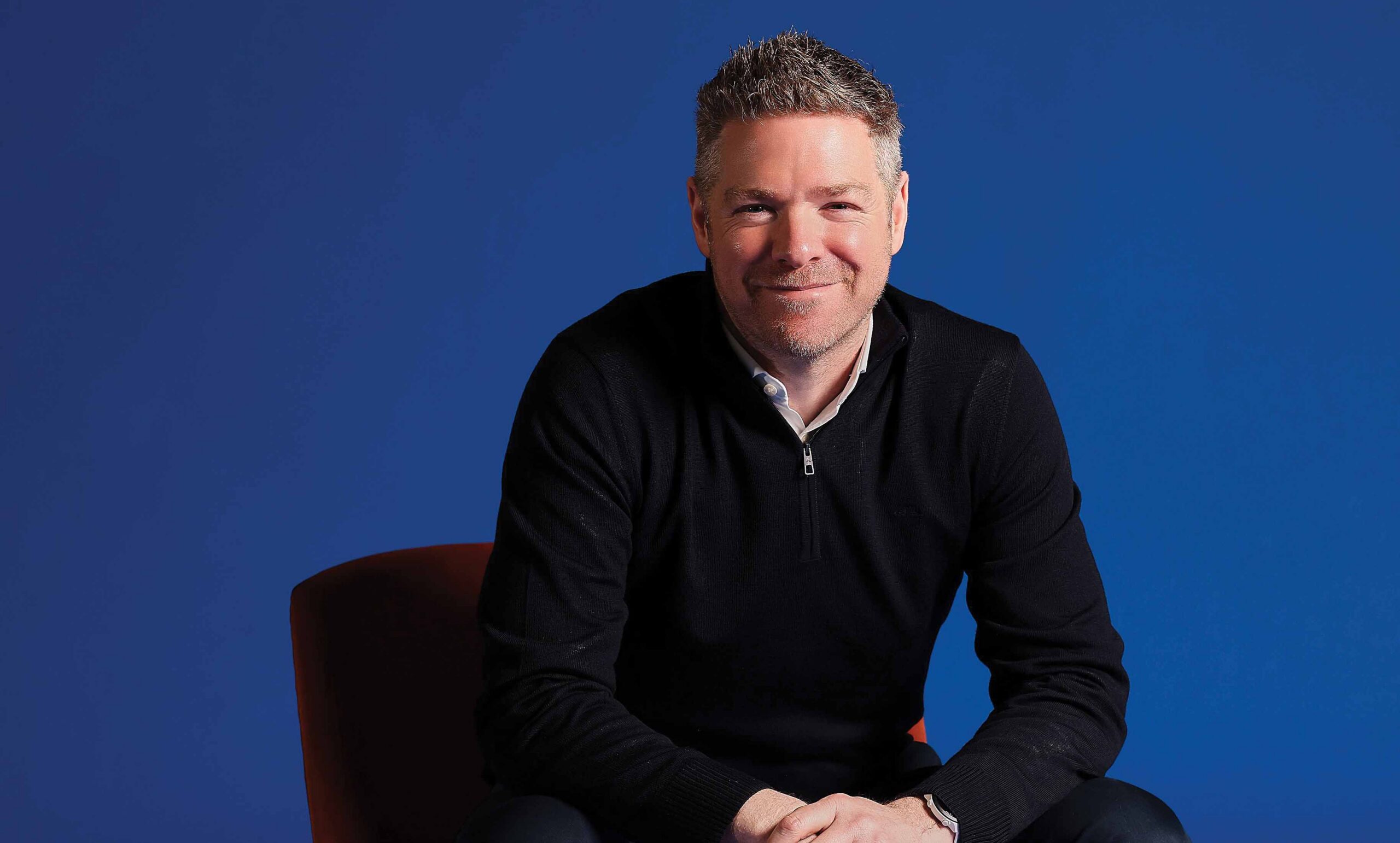
On the face of it, casinos and offices don’t have a whole lot in common. But, as David Kenny, managing director of Eurest, explains, there are more parallels than might appear obvious.
He should know; he operated casinos for seven years with Rank Group before joining Eurest in 2023. “Food played a big part in casinos because in many ways it is part of what attracts people – and keeps them there,” he says. “We would cater for people from all over the globe, so it was really important that our food offer was as good as the rest of London’s restaurants.”
This is where Eurest plays to its strengths as an expert partner to help businesses create that space for staff and see the catering offer as an investment in their people. It also helps to attract new staff. “A lot of businesses are seeing a real war for talent and a well thought through food and beverage program can play a huge part,” he says.
And in the post-Covid environment, the challenge is even more nuanced. “Businesses today are having to work harder than ever to get people to come into the office, and one of our really big focuses is to build culture around food and drink,” explains Kenny.
Among Eurest partners are everything from manufacturers to corporate HQs. While health and well-being sit at the core of every program they develop, the concepts they work on with partners span everything from traditional restaurants with counters and a person on the till to AI tray scanners and Amazon Just Walk Out stores.
“The days of one-size-fits-all and just taking a food offer off the shelf are long gone,” he says. “The ability to pivot and create something innovative that balances health and well-being with cost is an area that we really focus on.”
He mentions an example of a big bustling distribution center where people “have thought about what they wanted this space to be. The restaurants had lots of greenery and pictures, different kinds of furniture allowing people to sit on their own or in groups – somewhere you could have a great break. That is a business that has really got it.”
Another – a car manufacturer – has decided that every worker must be within a five-minute walk of a hot meal, regardless of where they are, from the production line to the office. “They go one step further and discount all healthy items by 50% – they see how workers being healthy translates to their bottom line. Ultimately it is an investment in reducing sickness leave and improving mental health.”
A different approach
Kenny’s experience before operating casinos gave him a good taste of the hospitality sector. After training as an accountant, he took a role focused on openings and acquisitions for Travelodge Hotels and went on to gain industry-wide experience running pubs, bars, restaurants and hotels.
At Eurest he found the perfect combination of his passions: people and food. “Compass Group, the parent company of Eurest, has a real desire to make a difference,” he says. “Whether that is in terms of the planet promise and sustainability, or our commitment to improving the lives of a million people by 2030, I have a job with a business that wants to leave the world a better place.” As a father of teenagers, this is something that is important to him.
Innovation and culinary creativity play a central role in Eurest. We speak in the week of Stop Food Waste Day, and he describes how the kitchen team has come up with a novel way to reuse leftover chips (fries) – the single biggest waste item by weight. “They took the chips and turned them into bread for a bun to be served with fresh fish for a delicious fish sandwich,” he says. Another example is the focaccia made with leftover porridge.
If sustainability is an evergreen priority in the business today, offering genuine value for money is another: “With one client we have a £5 meal that includes a bottle of water every day,” he says. “The reality is we’ll have a number of people for whom their meal at work could be their only hot meal of the day. So, for us, it’s important that that is healthy, substantial, it’s well thought out and not just a smaller portion of a dish.”
Other ways they are innovating include taking the food to the people. Eurest has invested in a battery-operated modular kitchen, which led the team to set up a Mexican food concept in a car manufacturing line, and he is looking at different ways to meet the workers where they are. “I bought two airstream caravans recently and we have Jiffy vans and coffee carts,” he says.
Among the trends he sees right now is a very different approach to eating in the workplace. Younger people prefer to graze through the day rather than have one big meal. The rise in the use of GLP-1 weight-loss drugs play into this dynamic of smaller portions and more eating moments during the day. “We do still see a canteen set-up, where people will come and have their meal and I think that socialization element is really important,” he notes, adding that it is especially important from a male perspective – one recent report found that 20% of men in the UK felt lonely at least some of the time while another reported that men are much less likely than women to seek help. Kenny believes that social moments sharing a meal can make a big difference.
A new work culture
On top of that, research has found that 76% of UK employees feel more productive after taking a break, but they don’t feel employers are taking that break seriously.
“We try to impart the message that a break shouldn’t be seen as a perk. Today, just 17% of UK workers take a break of 45 minutes or longer and one in five people say they spend 15 minutes or less on a break,” he says.
“These breaks should be seen as a time to disconnect, reset mentally, and protect physical and mental health, not just to eat. If you had a 15-minute break, it would be quite a challenge to do what most people need to do.”
Kenny was not yet working with Eurest when the pandemic happened and the world of work life changed dramatically – in many cases for good – creating a need to adjust the offering and reinforcing the need for a superb food offer in the first place. “I don’t think it’s a great shock that, in the office environment, Tuesday, Wednesday and Thursday remain the key busy days. But I think we’re also starting to see Mondays come back. I think Fridays will always be a struggle, but we are working with clients to give people a reason to come in,” he says.
Part of that piece, he says, is to create a space that can act as a community hub and not just a space that’s used only twice a day. “64% of employees said that improved workplace experiences, including food, would encourage them to come back into the office.”
Looking ahead, he thinks this will reinforce the need to deliver bespoke concepts that work for each organization. “The role of technology is an interesting one; whether it’s kiosk ordering, artificial intelligence from a tray scanner perspective, or Just Walk Out, tech will continue to have a key role in driving convenience and solving a problem,” he predicts.
As he describes the task at hand, a sense of responsibility comes across clearly. “As a business and an industry, we can play a massive role in what people are putting into their bodies, and that has an impact beyond any individual workplace,” he says.
Indeed, when it comes to long-term performance, the smartest bet any employer can make is on health, well-being and sustainability.
Tina Nielsen


