


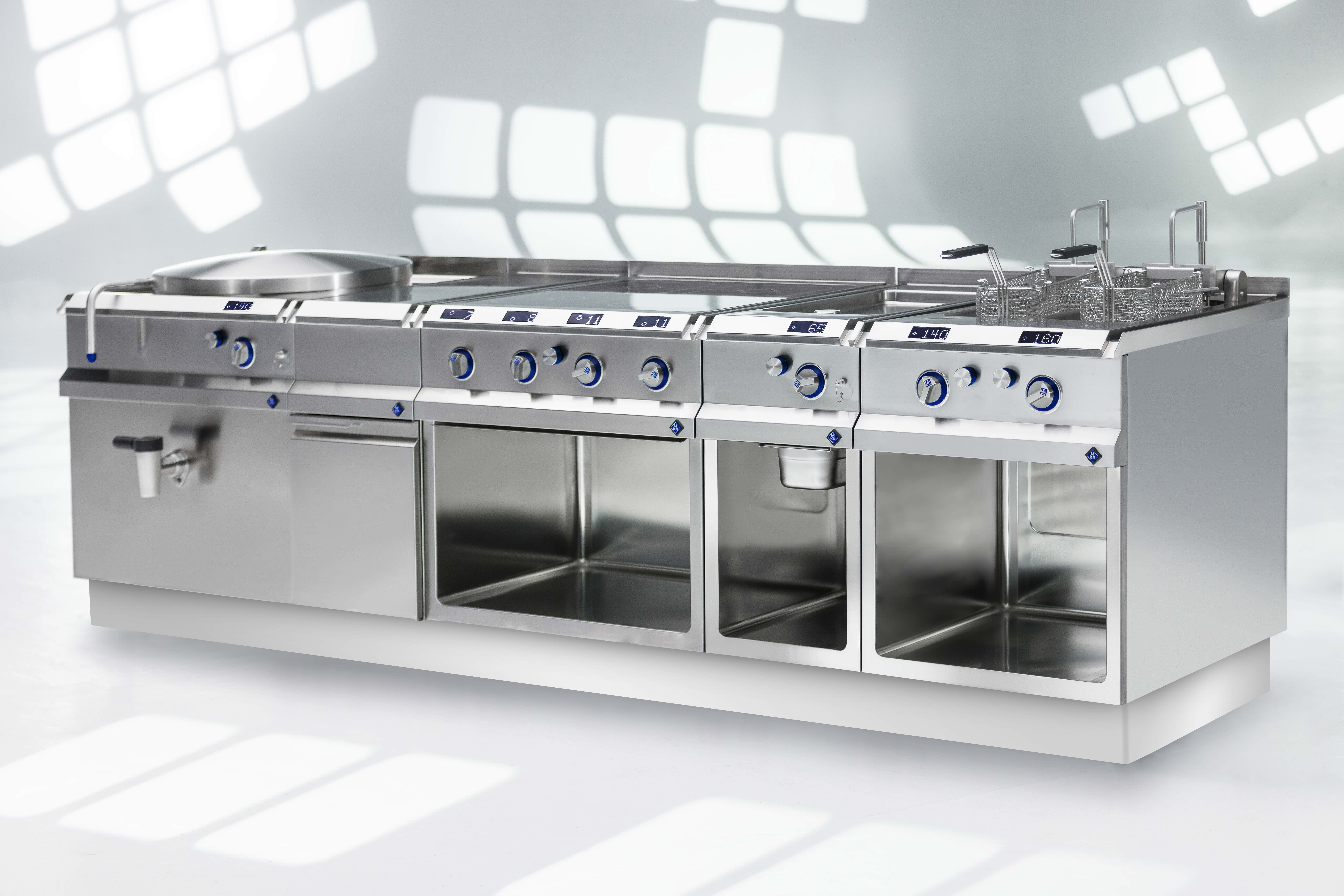
Sustainability in professional kitchens is becoming increasingly data-driven. Operators, consultants and manufacturers are no longer looking only at how efficiently equipment runs day to day – they also consider the carbon footprint of the materials used. This brings two major areas into focus: embodied carbon and operational carbon.
MKN is addressing both topics in parallel. With MKN SteelPlus, the stainless-steel option based on a mass-balance model, and the new OPTIMA, which can provide live energy-usage insights when connected to MKN’s Connected Kitchen digital ecosystem, operators gain new tools to support more transparent and responsible kitchen operations.
Reducing embodied carbon with MKN SteelPlus
Embodied carbon refers to the CO₂e emissions associated with raw materials and manufacturing before a product even enters the kitchen. Many operators and consultants now include this factor in their purchasing decisions and sustainability reporting.
With SteelPlus, MKN offers a stainless-steel option using CO₂e-reduced material certified through a mass-balance process. For selected products – including the new OPTIMA – this allows operators to reduce the embodied carbon of the equipment they install, without compromising durability, hygiene or performance.
Supporting operational carbon transparency
Operational carbon – the emissions generated through energy consumption during daily kitchen use – is becoming equally important. To support this, MKN’s new OPTIMA can deliver live energy-usage data when connected to MKN Connected Kitchen, the manufacturer’s digital ecosystem.
This gives operators:
- A clear understanding of real energy consumption
- The ability to compare usage across locations
- Transparency that supports internal efficiency goals
- A reliable data foundation for carbon reporting
Because the new OPTIMA provides actual energy data, customers can calculate their own operational CO₂e footprint using their individual electricity mix or corporate emission factors. This creates a more realistic and site-specific representation of a kitchen’s environmental impact.
In addition, smart features – such as automatic standby modes on selected modules – help avoid unnecessary energy consumption and support more efficient, consistent workflows in busy kitchens.
A combined approach for modern sustainability requirements
By addressing embodied carbon through material choices and supporting operational carbon transparency through connectivity and live energy data, MKN provides operators with a practical, future-oriented approach to sustainability.
As the industry continues to focus on measurable impact, reporting requirements and responsible resource management, tools like SteelPlus and the digital capabilities of the MKN OPTIMA offer operators new levels of insight and control.
While the journey toward fully carbon-transparent kitchen operations continues, these developments mark an important step for organisations seeking greater clarity, accountability and efficiency.
Further details:
For more information, visit mkn.com.


